
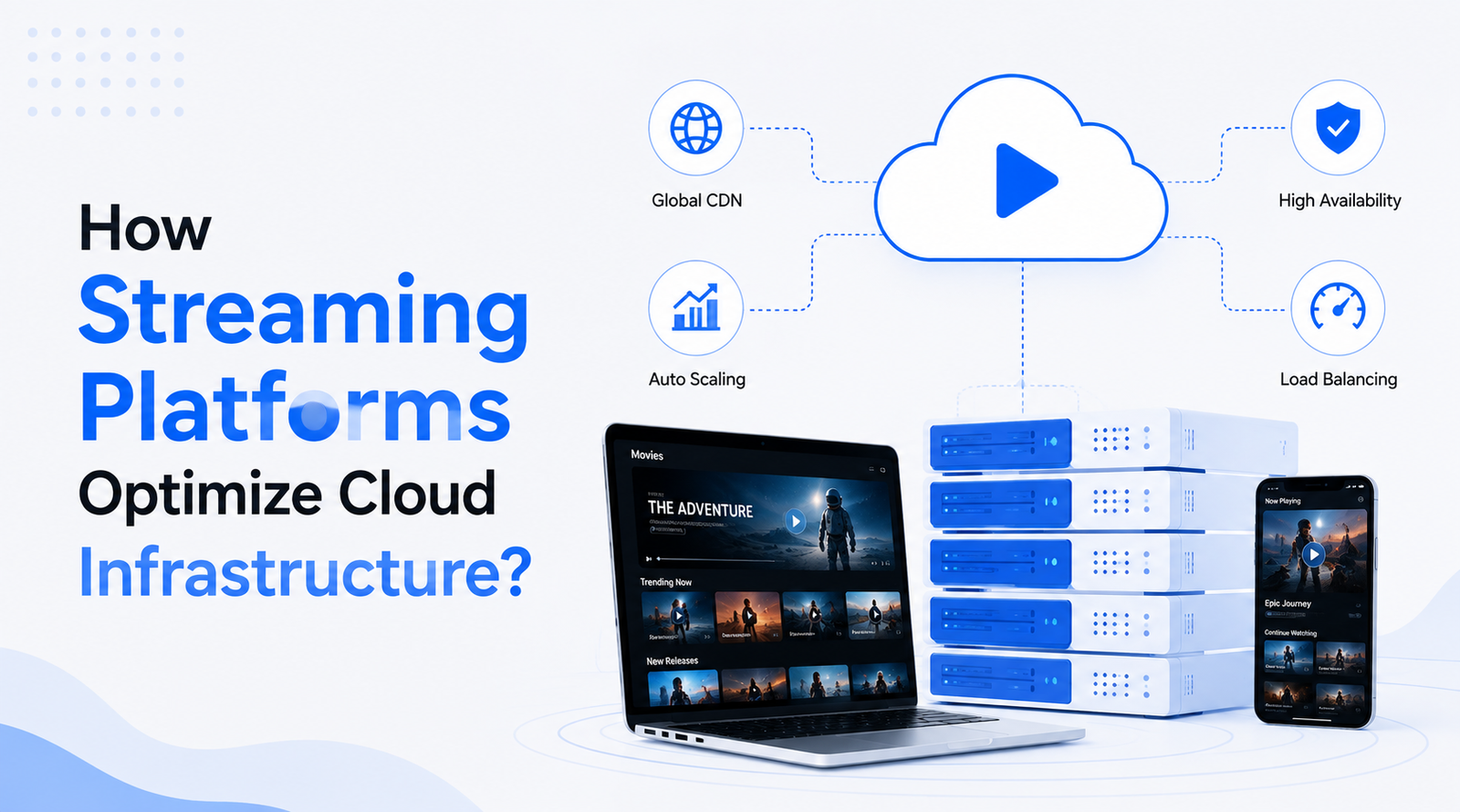
A single hour of 4K video pushes close to 7GB of data across a network. Multiply that by millions of viewers tuning into a live sports final, and the numbers turn overwhelming fast. Streaming platforms solved this problem years before most industries even noticed it existed, building infrastructure that survives Super Bowl-level traffic without buffering a single frame. Their approach provides a genuinely useful blueprint for anyone researching affordablecloud hosting for businesses that expect unpredictable, high-volume demand.
That blueprint offers valuable lessons that extend beyond the entertainment industry. Managed service providers juggling multiple client workloads face a smaller version of the exact same challenge: unpredictable spikes, restricted budgets, and zero tolerance for downtime. Studying how streaming giants architect their backends reveals practical patterns for cloud hosting for managed service providers managing dozens of accounts on shared infrastructure. The techniques scale down just as well as they scale up, which is precisely what makes them worth studying closely.
Elastic Scaling Architecture
Netflix and similar platforms run thousands of microservices, each scaling independently based on real-time demand rather than a fixed server count. When a new season drops, compute resources multiply within minutes and shrink right back once viewership settles. Container orchestration tools spin up new instances the moment traffic crosses a set threshold, then shut them down once demand drops back.
Engineers pull these thresholds from historical viewing data and adjust them before a known high-traffic event, not after the surge has already started. A holiday release, for instance, gets planned weeks in advance, with capacity locked in before the first viewer presses play. This elastic model prevents the two extremes that hurt most businesses: overpaying for idle capacity or crashing during a surge nobody predicted.
Global Edge Delivery
Edge servers positioned across dozens of regions hold video content closer to viewers, cutting the physical distance data travels before reaching a screen. A viewer in Mumbai pulls cached content from a nearby node instead of an origin server thousands of miles away. Static assets, thumbnails, and even parts of the video manifest itself often live on these edge nodes permanently, refreshed only when the underlying content changes.
The same principle applies to a checkout page or an API response; distance still adds delay regardless of what data is traveling. This distributed caching strategy reduces milliseconds off load times, the difference between instant playback and a visible stall during a season premiere.
Redundancy and Failover
Streaming platforms run parallel infrastructure across multiple availability zones. If one data center goes down, another one picks up the traffic within seconds, before a viewer even reaches for the refresh button. Health checks run on every service around the clock, pulling a failing node out of rotation before it drags the rest of the system with it.
Engineers treat component failure as a routine event, not an exception, and run simulated outages regularly to confirm the failover actually holds up. This redundancy costs more upfront, but it protects revenue during exactly the moments when downtime would cost the most, a viral episode drop or a live event nobody wants to miss.
Smart Resource Allocation
Running everything on premium, always-on servers would drain even the largest platform’s budget fast. Engineering teams combine reserved capacity for steady traffic with spot instances for short-term increases, which greatly reduces infrastructure costs without losing reliability during busy times. Some platforms report cutting compute costs by nearly forty percent this way, without touching the viewer experience at all.
Teams that track usage closely, instead of provisioning for a worst-case number every month, tend to come out ahead on this pricing model. Smaller businesses adopting a similar mixed approach often see meaningful savings within the first billing cycle.
Applying These Lessons
Few businesses need Netflix-scale infrastructure, but the underlying principles translate directly across industries, regardless of how large or small the operation happens to be:
- A regional e-commerce store during a flash sale faces roughly the same spike pattern a streaming platform sees on premiere night, just at a smaller scale.
- A SaaS platform onboarding a large enterprise client all at once needs the same elastic capacity a live sports broadcast depends on.
- An agency managing dozens of client websites benefits from the same failover thinking that keeps a streaming service online during an outage.
Providers such as MilesWeb build these same principles into smaller-scale cloud plans, pairing flexible resource scaling with daily automated backups and complimentary professional email accounts for teams migrating from shared hosting setups. While the scale of the services differs, the fundamental reasoning behind their setups remains the same.
Concluding Insights
Streaming platforms proved that infrastructure built for the toughest possible traffic performs even better under everyday load, an unintentional side benefit of designing for the worst case first. MilesWeb builds that same scale-ready thinking into its hosting infrastructure, giving growing teams room to expand without a full platform rebuild later.
The real takeaway from streaming’s engineering playbook is not about adding complexity for its own sake; rather, it is about building infrastructure once to meet future demand, allowing that groundwork to support the business when growth finally occurs. Infrastructure planned this way turns from a cost center into the reason a business keeps working when everyone else’s servers fall over, long after the traffic spike that would have taken down a less prepared competitor.




Comments